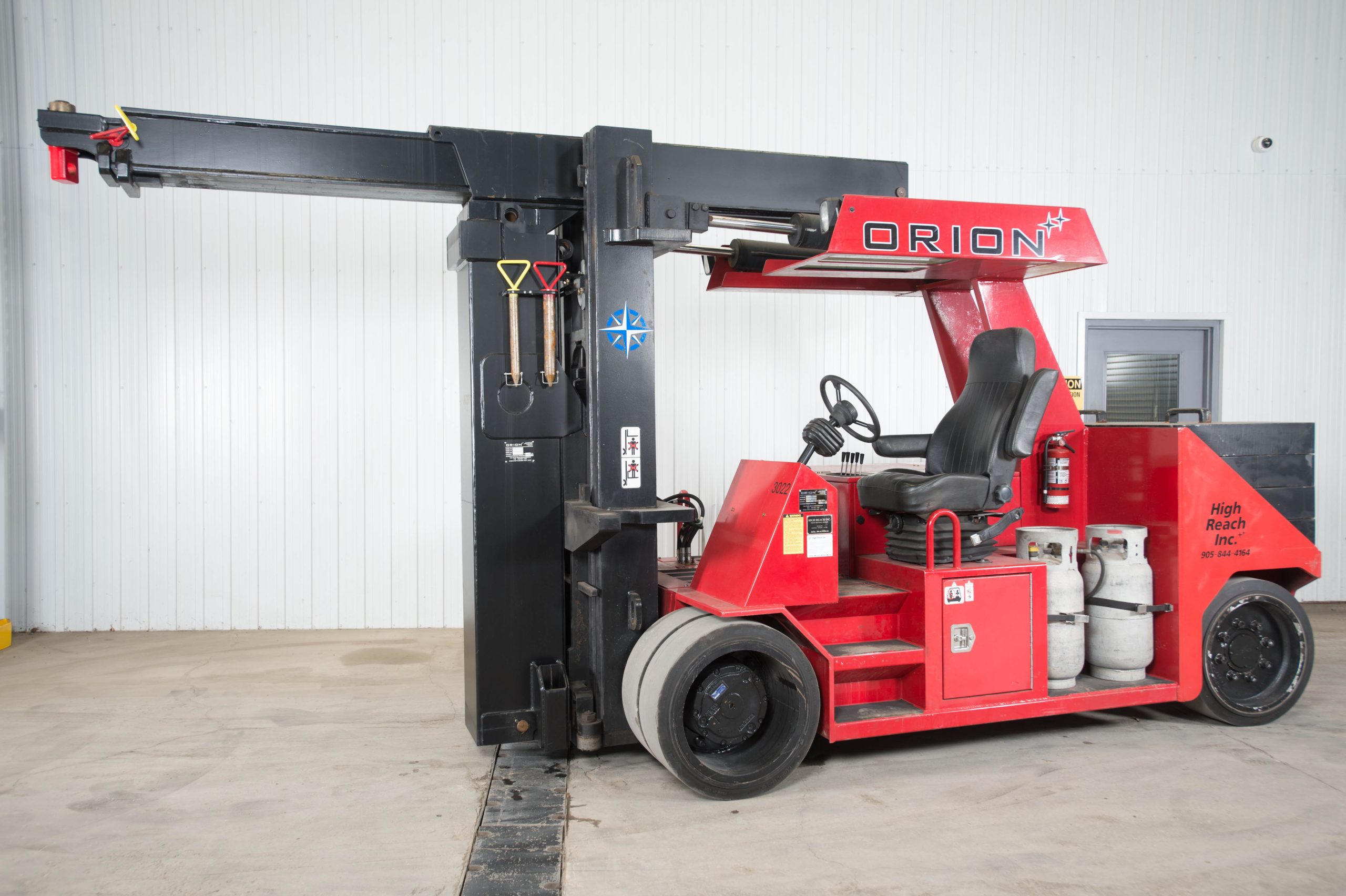
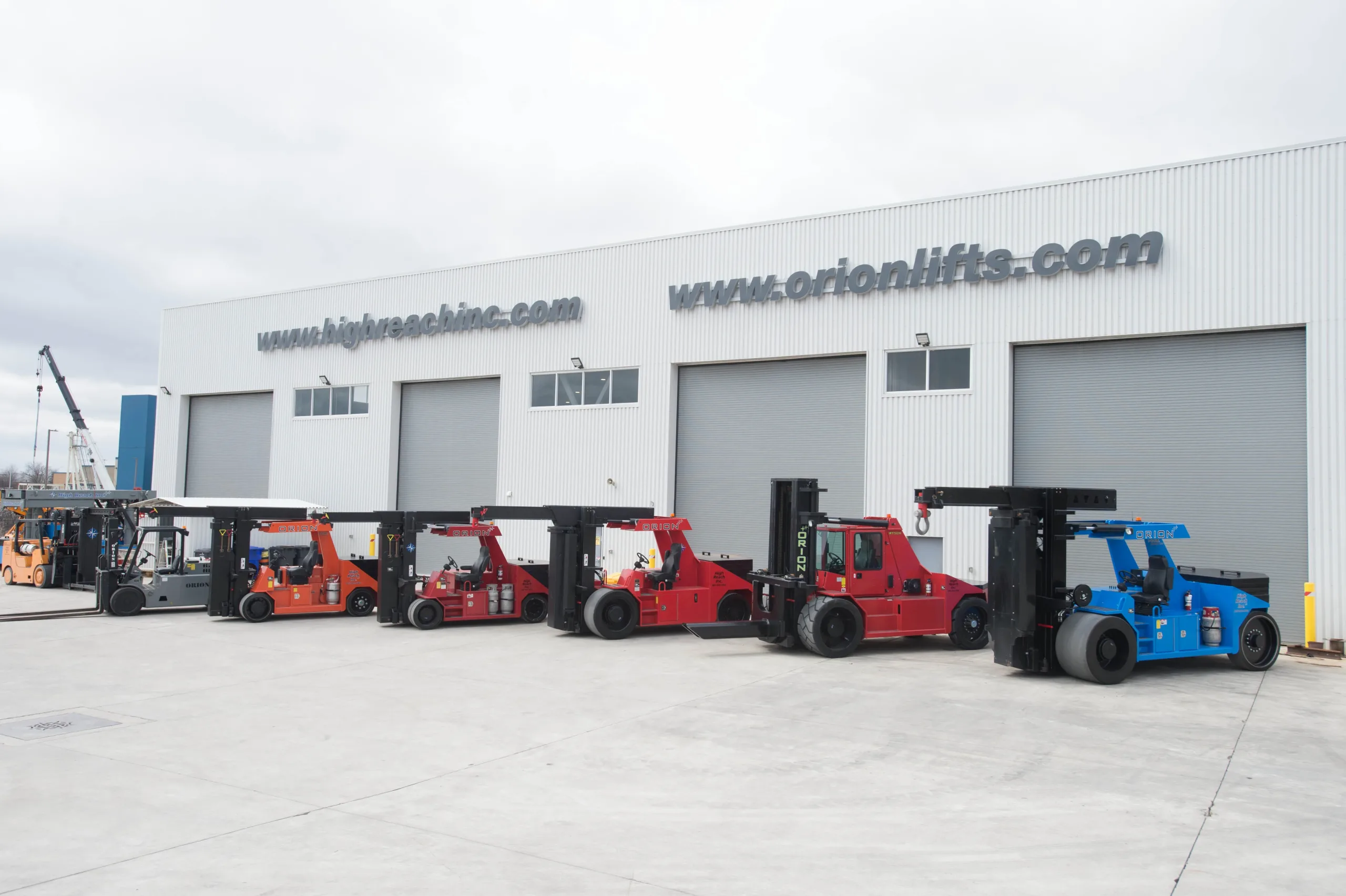
If you have been searching for a forklift that can handle heavy, oversized, or awkwardly shaped loads with genuine precision, Versa-Lift is a name that keeps coming up. For good reason. Versa-Lift telescoping forklifts occupy a specific and highly valuable niche in the heavy lifting world. They combine serious load capacity with telescoping reach and exceptional maneuverability, making them one of the most versatile industrial forklifts available for machinery moving, rigging, and plant maintenance.
But Versa-Lift produces multiple models across a wide capacity range, and the differences between them matter. Choosing the wrong model for your application can mean undersizing a lift, paying for capacity you do not need, or bringing a unit onto a site it was never designed for.
This guide breaks down every Versa-Lift model available through High Reach Inc., explains the real-world applications each is built for, and gives you a clear framework for choosing the right unit for your specific job.
What Makes Versa-Lift Different from a Standard Forklift?
Before getting into the individual models, it is worth understanding why Versa-Lift forklifts occupy a category of their own.
A standard counterbalance forklift is designed for repetitive pallet handling in warehouse environments. It lifts at a fixed mast angle and moves loads from A to B efficiently within a predictable set of parameters. Versa-Lift forklifts are built for a different problem entirely.
Versa-Lift units use a telescoping mast system combined with a variable wheelbase design. This gives them three significant advantages that matter enormously in industrial and construction environments.
- Precision placement: The telescoping reach allows operators to position loads in tight spaces without repositioning the entire machine. This is critical when installing heavy equipment into confined bays, dropping machinery onto a specific mounting point, or working around obstacles on a busy plant floor.
- Stability across a wide load range: The variable wheelbase adjusts to the weight and reach requirements of each lift, maintaining stability even as the mast extends. This is why Versa-Lift units are trusted for machinery moving and rigging work where even a small stability margin error can be catastrophic.
- Indoor and tight-space capability: Unlike rough terrain cranes or large boom lifts, many Versa-Lift models are sized to operate indoors on prepared concrete floors, including inside automotive plants, manufacturing facilities, and warehouses.
That combination of reach, capacity, and precision is what makes Versa-Lift equipment the preferred tool for millwrights, riggers, industrial contractors, and plant engineers dealing with machinery that simply cannot be moved with conventional forklifts.
Understanding the Two Numbers in Every Model Name
Every Versa-Lift model carries two figures in its name, such as 40/60 or 60/80. Those numbers are the single most misunderstood thing about this equipment, and getting them the wrong way round can lead to a badly undersized lift.
The two numbers refer to the position of the machine's counterweight, not to how far the load sits from the mast.
A Versa-Lift has a hydraulically extending frame that moves the counterweight rearward. Extending it lengthens the counterbalance lever, which increases the machine's rated capacity. So the lower number is the rating with the frame retracted, and the higher number is the rating with the frame extended.
That is what makes these machines so useful in plants. Retracted, the unit is compact enough to travel through doorways and down aisles. Extended, it becomes a substantially higher capacity machine for the pick itself. One machine covers a capacity band that would otherwise need two.
Worth keeping separate in your head is load centre, which works in the opposite direction. The further the load sits from the mast, the lower the capacity, regardless of counterweight position. Both factors apply to every lift, and both are on the load chart.
The capacities below are the manufacturer's nominal ratings, which is what the model names refer to. The rated capacity for any specific lift depends on the load centre, the mast height and the counterweight position, and it comes from that model's load chart rather than from a headline figure. Ask us for the chart before you plan a lift.
Versa-Lift Model Overview: The Full Lineup
High Reach Inc. offers the complete Versa-Lift model range for both rental and purchase. Here is what each model is designed for and where it fits in the capacity spectrum.
Versa-Lift 17/25
The 17/25 is the entry point of the Versa-Lift lineup and one of the most versatile units in the range for light to medium industrial applications. Its dual rating gives 17,000 lbs with the counterweight retracted and 25,000 lbs with it extended, so a single compact machine covers a useful capacity band.
Typical use: Machinery relocation in medium-sized manufacturing facilities, equipment installation on construction sites, general rigging work.
View Versa-Lift 17/25 details →Versa-Lift 25/35
The 25/35 steps up into the mid-range and is one of the most commonly requested Versa-Lift models for industrial plant work. At 25,000 lbs retracted and 35,000 lbs extended, it handles most standard plant maintenance and machinery moving tasks without oversizing the equipment.
Typical use: Automotive tooling changes, production line equipment moves, mid-size industrial installation projects.
View Versa-Lift 25/35 details →Versa-Lift 40/60
The 40/60 marks a significant step up into heavy industrial territory. At 40,000 lbs retracted and 60,000 lbs extended, this is the model that handles automotive stamping dies, large injection molds, and the kind of heavy tooling that defines day-to-day work in Southern Ontario's manufacturing sector.
Typical use: Automotive die changes, large machinery installation, press equipment relocation, retooling projects.
View Versa-Lift 40/60 details →Versa-Lift 60/80
The 60/80 enters serious heavy lifting territory. At 60,000 lbs retracted and 80,000 lbs extended, this unit is built for the kind of equipment moves that most forklifts simply cannot attempt. Think large stamping presses, heavy industrial generators, and multi-component machinery assemblies.
At this capacity level, floor loading becomes an important consideration. The 60/80 requires a surface capable of handling its own weight plus the load, which typically means reinforced industrial concrete or outdoor pads. If your site engineer has already assessed floor loading, this unit gives you enormous flexibility for your heaviest moves.
Typical use: Heavy press installation and relocation, large transformer and generator placement, major plant retooling.
View Versa-Lift 60/80 details →Versa-Lift 100/140
The 100/140 is the flagship of the Versa-Lift line and one of the most capable telescoping forklifts available anywhere. At 100,000 lbs retracted and 140,000 lbs extended, it is designed for projects where virtually no other forklift can do the job.
The 100/140 requires site preparation, floor loading assessments, and careful rigging planning regardless of whether the work is indoors or out. For projects involving very heavy presses, large industrial vessels, or infrastructure components, it eliminates the need for a mobile crane setup while maintaining the precision positioning that Versa-Lift engineering is known for.
Typical use: Heavy industrial plant installation, utility and energy infrastructure, major capital equipment relocation projects.
View Versa-Lift 100/140 details →Versa-Lift Model Comparison at a Glance
Use this table to quickly identify which model aligns with your load requirements. Remember that the retracted figure is the conservative one and the extended figure requires room to deploy the counterweight.
| Specification | 17/25 | 25/35 | 40/60 | 60/80 | 100/140 |
|---|---|---|---|---|---|
| Rated Capacity (Retracted) | 17,000 | 25,000 | 40,000 | 60,000 | 100,000 |
| Rated Capacity (Extended) | 25,000 | 35,000 | 60,000 | 80,000 | 140,000 |
| Best For | Light industrial, rigging | Mid-range plant work | Automotive tooling | Heavy presses | Heaviest loads |
| Indoor Use | Yes | Yes | Yes | Yes | Yes |
| Rental Available | Yes | Yes | Yes | Yes | Yes |
| Purchase Available | No | Yes | Yes | Yes | No |
How to Choose the Right Versa-Lift Model for Your Job
Selecting the right Versa-Lift model comes down to four factors. Work through each one before you call your rental or sales contact.
- Know your maximum load weight. Start with the heaviest single load you will need to move. Do not estimate. Weigh it or get the manufacturer's spec sheet. Then add a safety margin and, wherever possible, match that number to the model's retracted rating rather than its extended one. Sizing to the retracted figure means the machine can still make the lift if site conditions leave no room to deploy the counterweight.
- Check you have room to extend. The higher rating in each model name assumes the counterweight is fully deployed, which needs clear space behind the machine. In a tight bay, against a wall, or in a congested aisle you may be working at the retracted rating whether you planned to or not. Measure the working area, not just the load.
- Assess your site conditions. Lighter models in the Versa-Lift range can operate on standard reinforced industrial concrete. Heavier models require site-specific floor loading assessments. Know your floor specification before you commit to a unit, especially for indoor moves in existing facilities.
- Rental versus purchase. For project-based work such as a plant shutdown, a single installation, or a multi-week retooling cycle, rental almost always makes more financial sense. For operations with recurring heavy machinery moves throughout the year, owning a unit often pays for itself quickly. We can walk you through the numbers on both options based on your actual usage patterns.
If you are still weighing a forklift against a crane for the same job, our guide on what to compare in a rental contract covers the questions worth asking any supplier before you sign.
Why Ontario Industrial Operations Choose High Reach Inc. for Versa-Lift Equipment
High Reach Inc. has been supplying heavy lifting equipment to Ontario's manufacturing, automotive, and industrial sectors for over 40 years. We carry the full Versa-Lift lineup alongside ORION high-capacity forklifts built in our own Oakville facility and Broderson carry deck cranes, with rental and purchase options and delivery across Ontario.
Carrying all three lines matters more than it sounds. It means the recommendation you get is based on your job rather than on what happens to be in the yard. Sometimes the answer is a Versa-Lift. Sometimes it is a carry deck crane. Occasionally it is both on the same project.
Our team does not just hand over keys. Before your equipment arrives on site, we discuss your specific application, walk you through the load charts, and make sure the unit you are renting or buying is genuinely matched to the job. That process protects your project timeline, your crew, and your budget.
For Windsor's automotive sector in particular, Versa-Lift equipment has become a standard part of plant shutdown and retooling work. If your facility runs planned or unplanned shutdowns and needs reliable, high-capacity machinery moving capability on short notice, having a relationship with a rental partner who carries these units in inventory is worth more than the rental rate alone. When something fails mid-production, we also handle same-day emergency equipment.
Ready to Find the Right Versa-Lift for Your Job?
Our team will match you to the right model based on your capacity, reach, and site requirements. No guesswork.
highreachinc.com | Serving Ontario and North America